universeofmartian@gmail.com

Starliner and Artemis: commercial label vs. commercial discipline

NASA’s Commercial Crew Program was supposed to be the template: services-based procurement, private ownership of hardware and competition between providers. Yet NASA has now formally designated Boeing’s 2024 Starliner crewed test flight as a Type A mishap — its most serious category — and leadership has been explicit that the most troubling failure was not

Starliner and Artemis: commercial label vs. commercial discipline Read More »

Lux Aeterna raises $10 million ahead of 2027 reusable satellite demo

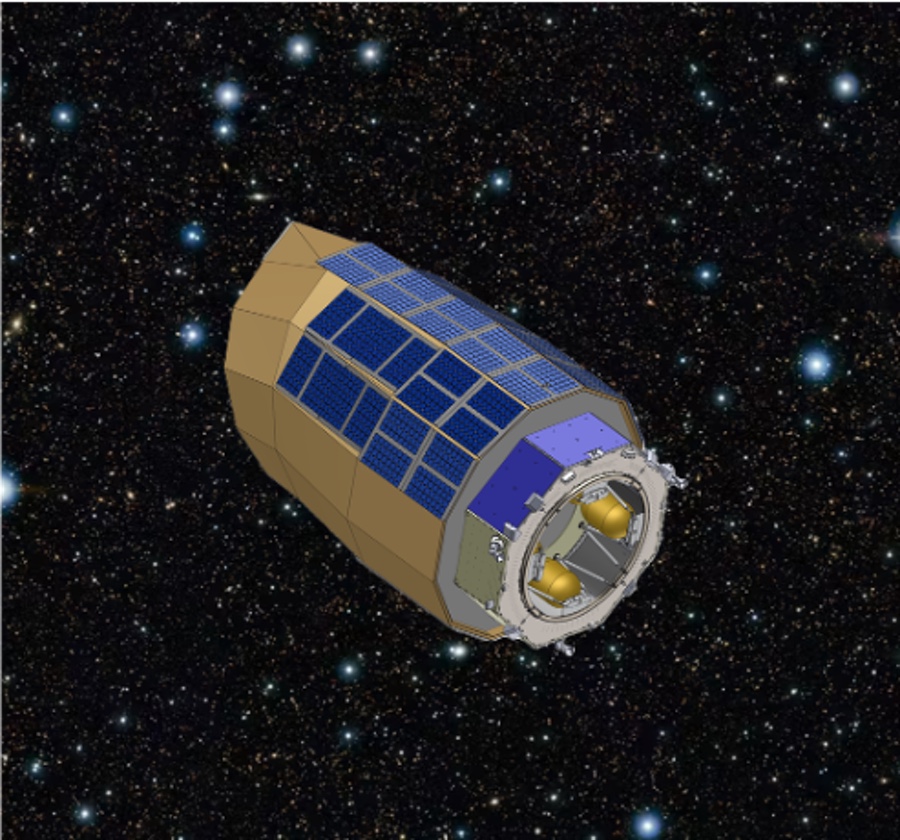
Denver-based Lux Aeterna has secured $10 million in seed funding to develop a reusable satellite designed to survive atmospheric reentry and fly again with new payloads, starting with a demonstration flight slated for early 2027. The post Lux Aeterna raises $10 million ahead of 2027 reusable satellite demo appeared first on SpaceNews.

Lux Aeterna raises $10 million ahead of 2027 reusable satellite demo Read More »

Landspace tests 220-ton methane engine for future heavy-lift launchers

Chinese launch startup Landspace says it has completed a long-duration full-system hot-fire test of its new 220-ton-class methane rocket engine for new-generation launchers. The post Landspace tests 220-ton methane engine for future heavy-lift launchers appeared first on SpaceNews.

Landspace tests 220-ton methane engine for future heavy-lift launchers Read More »

Meridian Space Diplomacy Forum & Executive Space Training – March 25 & 26

Washington, D.C. — Meridian International Center today announced the return of its Space Diplomacy Forum: Shared Horizons (https://diplomacyforum.meridian.org/space), a half-day forum dedicated to advancing cooperation in outer space at a […] The post Meridian Space Diplomacy Forum & Executive Space Training – March 25 & 26 appeared first on SpaceNews.

Meridian Space Diplomacy Forum & Executive Space Training – March 25 & 26 Read More »

GNSS resilience is an economic and security priority

Modern society has become profoundly reliant on Global Navigation Satellite Systems (GNSS). These systems support aviation safety, emergency services, finance, communications, energy networks and an expanding array of autonomous and industrial systems. Yet despite this reliance, GNSS remains inherently fragile: low‑power signals transmitted from medium Earth orbit are surprisingly easy to degrade, and the consequences

GNSS resilience is an economic and security priority Read More »